

Congratulations on receiving your new shofar! But what’s this? As you exuberantly lift it to your mouth preparatory to your first blast, you notice, well, a faint (or not so faint) odor emanating from your newest acquisition.
When you buy a shofar, please remember that since the shofar comes from an actual real, live animal, there may be some particles of sinew, muscle or bone left inside the shofar which may cause this odor.
No fear! Here are some tried and true methods for eliminating shofar odor!
Why Does a Shofar Smell?
Understanding what causes shofar odor helps you address it effectively. A shofar is made from an animal horn—typically ram or kudu—and despite thorough cleaning during manufacturing, some organic residue can remain deep within the horn’s porous structure. This residue, combined with moisture from blowing, creates an environment where bacteria can thrive and produce unpleasant odors.
Several factors contribute to shofar smell:
- Residual organic matter – Small particles of cartilage, sinew, or bone marrow may remain inside the horn after processing.
- Moisture buildup – Saliva and condensation from blowing accumulate inside the shofar over time.
- Bacterial growth – Warm, moist conditions inside a stored shofar allow bacteria to multiply.
- Improper storage – Storing a shofar in a sealed bag while still damp traps moisture and accelerates odor development.
The good news: with proper cleaning and maintenance, you can eliminate existing odors and prevent them from returning.
How to eliminate shofar odor
The best way is to start with the lightest cleaning methods and work your way to the strongest if necessary. First, gently scrub the interior of the shofar with a toothbrush and water. Let dry naturally.
1. Vinegar method: Pour synthetic vinegar into the shofar and let dry naturally. Then soak the shofar in warm soapy water for twenty minutes and remove to dry. This method can be repeated once or twice.
2. Hydrogen peroxide method: Plug the shofar mouthpiece with an earplug and fill it halfway with hydrogen peroxide which will bubble as it cleans out the shofar from particles and residue. Swirl it around the horn and then pour it out. You can repeat this method once or twice, too.
3. Gravel method: Plug the ram’s horn shofar or the yemenite shofar mouthpiece with an earplug and pour in some aquarium gravel, not large or sharp pieces. Plug the large end with a foam nerfball and shake it for about fifteen minutes. Remove nerfball and gravel, then replace balll, fill halfway with alcohol and shake for a minute. Remove nerfball and earplug, pour out alcohol and let dry naturally.


4. Oxi clean method: Plug mouthpiece with an earplug, fill the shofar or the yemenite shofar halfway with hot water and put a scoop of “oxi clean” inside. Plug the large end with a nerfball and let sit for an hour. Remove ball, pour out oxi clean, rinse and let dry.
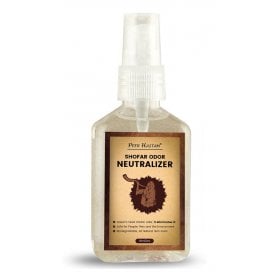
5. Shofar odor neutralizer spray: non-toxic biodegradable Shofar Odor neutralizer spray will eliminate unpleasant scents from your shofar leaving it odor free. Shofar Odor Neutralizer Spray
6. Baking soda method: Dissolve a few tablespoons of baking soda in water and pour into shofar. Block mouthpiece and large end as above and shake for about a minute. Pour out liquid, rinse and allow to dry naturally.
7. GROUND Coffee: This is from one of our readers, put 1lb of GROUND Coffee in it… Leave it in there for 3 days. It should take the smell out of it
Preventing Shofar Odor: Best Practices
Prevention is always easier than cure. Follow these practices to keep your shofar fresh:
- Dry thoroughly after each use – After blowing, hold the shofar with the mouthpiece facing down and tap gently to release moisture. Let it air dry completely before storing.
- Store in a breathable bag – Use a cloth or velvet shofar bag rather than plastic, which traps moisture. Leave the bag slightly open if possible.
- Keep in a cool, dry place – Avoid storing your shofar in humid environments, attics, or basements where moisture can accumulate.
- Clean periodically – Even if your shofar doesn’t smell, a light cleaning once or twice a year helps prevent buildup.
- Use a shofar stand – When displaying your shofar, a stand allows air circulation and prevents moisture from pooling inside.
Proper Shofar Storage
How you store your shofar between uses—especially during the months between Rosh Hashanah and the next High Holiday season—significantly impacts its condition and smell.
- Never store wet – Always ensure your shofar is completely dry before putting it away.
- Avoid extreme temperatures – Heat can cause the horn to crack; cold can make it brittle.
- Keep away from direct sunlight – UV rays can fade and dry out the horn over time.
- Position matters – Store with the bell (wide end) facing down so any residual moisture drains out rather than toward the mouthpiece.
- Check periodically – Even in storage, inspect your shofar occasionally for signs of damage or developing odor.
When to Seek Professional Help
If you’ve tried multiple cleaning methods and the odor persists, or if you notice cracks, chips, or other damage to your shofar, it may be time to consult a professional. Some Judaica shops and shofar craftsmen offer cleaning and repair services. In extreme cases, the shofar may need to be professionally re-bored or refinished.
For more information about shofar types and how to choose the right one, see our comprehensive guide: What Every Family Should Know About the Shofar.
Need help learning to blow your shofar? Check out our Shofar Playing Technique guide.

Frequently Asked Questions About Cleaning a Shofar
Can I wash my shofar with water?
Yes, but with caution. You can rinse the inside with warm (not hot) water, but never submerge the entire shofar or let water sit inside for extended periods. Always dry thoroughly afterward by holding it mouthpiece-down and allowing air circulation.
Will cleaning my shofar affect its sound?
Proper cleaning should not affect the sound. In fact, removing buildup and residue can sometimes improve sound quality. However, avoid using abrasive materials that could scratch the interior or damage the mouthpiece.
How often should I clean my shofar?
Clean your shofar at least once a year before Rosh Hashanah. If you use it frequently throughout the year, clean it every few months. After each use, simply tap out moisture and let it air dry—this routine maintenance prevents odor buildup.
Is shofar odor a sign that something is wrong?
A mild natural smell is normal for a shofar made from animal horn. However, a strong, foul odor indicates bacterial growth or residual organic matter that needs to be cleaned. Persistent odor after cleaning may require professional attention.
Can I use household cleaners on my shofar?
Avoid harsh chemical cleaners, bleach (except diluted lemon bleach as described above), and anything with strong perfumes. Stick to natural solutions like vinegar, hydrogen peroxide, baking soda, or purpose-made shofar cleaning products. These are effective and won’t damage the horn.




Thank you so much. I purchased 3 shofars for my husband and he is working hard. However, the odor is, well lets just say, not so heavenly…
Blessings,
Diane
Oh, thank you! My new shofar from my Grandparents as a Bat Mitzvah gift is just…. oh my.
Now for the first time I get to blow shofar for my temple (without odor!)
Shalom, Tov Toda, I did receive from Yisrael the shofar which I requested, it was nice to get it, even though the box had been ripped to give any individual the chance to see the contents or given the chance to take it out, but By the Hand of the God of Yisrael it safely arrived, all was intact, the Shofar, the bag, the fragrance for the Shofar. Now I shall learn to play or blow it, at the appropiate times, stated in the Torah, or learn to blow the 4 types, I learned to play the harmonicas, so I shall learn this Great instrument, as an honor to my great friends in Yisrael and the Elohim of Yisrael. Tov David.
Shalom Rav. Thank you so much for the info. We just got our new shophar and it’s such a blessing to have. I’ll definitely try out your advice. Tov Toda.
It is sooo… amazing! I have successfully eliminate the odor from the shofar by using the ozone air purifier machine. I read a suggestion from one of the website and at home I happen to have the machine. It works far better than any other method. It eliminates the smell without even exposing the shofar with any kinds of chemical and objects. I only leave the shofar with the machine for a few hours, and the smell completely disappear! Before, the smell was very bad. When I read the ozone machine instruction, it says: eliminate odor caused by bacteria. SO it works! I hope this can help others! Daniel W Pradhana (Jakarta – Indonesia)
I am going to try a product called Hydrocide. We use it for various smells in the Restoration Industry. It works incredibly well on odors as bad as Fox urine. It will completely eliminate the smell. I am hoping it will work on the Shofar. I will try and let everyone know.
Shalom,
Any chance to have all steps starting from unhorning the horn or a ram or other animal ?
Todah raba.
I use Braggs Apple Cider Vinegar. I used it undiluted and flush it through its larger end. I use 1/4 cup undiluted. Later some ‘derby’ which is smelly comes out of inside.It works.Later I flush with running tap water and let it dry.
I tried hydrogen peroxide(bottled) from any pharmacy store. Later I tried the Listerine mouthwash (undiluted) to flush it out many times with tap water. I use hair dryer to blow dry from bell end. This seem to rid of odor.
Thanks for the helpful comments my Jewish brothers/sisters. I am a Christian with a smelly Shofar. :o) Will clean it out today. If we love the world, we are in enmity with God. With Love, Brother John
Thanx for all the tips very useful
Which concentration of hydrogen peroxide should I use? it ranges from 50% to 3%,
I have had my Shofar for a few years and use it in church praise and worship and warfare. It needs a clean. Will try the apple cider method. My Shofar sounds so good and our church responds. Just starting the be smelly now.
How to remove mildew from a shofar? It has been in storage.
Am trying these methods listed above. so far the hydroen proxide did nothing. am trying the ozone next. The shofar did not smell when it first arrived and has been in the open out of sunight and when I picked it up to blow I almost lost the cookies as it were.
the gravel is next. thanks to everyone. something will work. I need it for Shabbat services. shalom
I soaked the shofar in soap. Then Rinsed it, and then covered it with olive oil.
It smells like olives now 🙂
I tried the vinegar….but it still had a bad smell…..so what I did. I let it dry out..Then I put 1lb of GROUND Coffee in it… Left it in there for 3 days. And it took the smell out of it. I just need to learn how to play it…lol
I Have been so Blessed to receive a Shofar ! Lo and behold the odor was not a gift.
I was told with love to get past and I did ,yet I knew in my heart there was
a solution, I tried Listerine full strength and to my delight it worked!!!!!
Now I am able to blow the Shofar for Gods Glory!!!!!!
Grayce
Thanks for the tips. Each time I blow my shofar I end up with an irritation on my lips (a fine rash that dries out my lips and makes them red). I have been looking for a way to clean it as I now know it must be coming from the shofar (and the smell coming from the shofar mouthpiece seems to be getting worse). Is there something to make sure there’s no bacteria still floating around?
I was told to wash it with arak.
I couldn’t afford it, now i am trying the vinegar method, after few mins I will see if it works..
Jim – the coffee idea worked wonderfully! So glad I found your comment.
I tried a few peroxide rinses without good results although a little sinew did rinse out. Then I rinsed it with Gain dish soap and warm water for about five minutes, swishing it around a bit, and the results were great! Finished it off by wiping the outside with olive oil a couple of times.
I just bought my first shoafar praise God the smell in that horn is terrable but the horn is beautiful trying to lern how to play.
I use anointing oil and “Thieves” type of oil for disinfecting/cleaning. Smell good!
I use the aquarium gravel for 15 minutes, then fill with lemon bleach. Let sit for about an hour with ear plug in one end and some kind of item to plug the bell. Pour out and presto.
Just a reminder for everyone. Periodically, it is suggested to pour alcohol in shofar and swish around to remove the odor from spittal. It also helps make it easier to blow. This is from my experience anyway.
I got my grandfather’s old shofar, with probably about 70 years worth of shofar stink. Poor dog got the blame until we figured out where it was coming from. I tried several of these methods, with only slight improvement, and the smell was making me nauseous, do I needed to take drastic action. I put 4 drops of tea tree oil on a toothbrush, and rubbed it all over the interior of the shofar, to every spot that could be reached. That seemed to do the trick!
I tried a different method that worked well. I plugged the bottom hole with a foam earplug, filled it with water and added a denture tablet. I let it stand for a coupe of hours and then rinsed it well. This go rid of almost all of the smell. Time & use did the rest.
I purchased a Shofar in Old Jerusalem, it it beautiful but it is full of a brownish substance that appears to be dirt. Can I immerse or soak it in water or in soapy water to get the dirt out?
Thank you
The spray really worked, I tried leaving hydrogen perioxide overnight, little bits of gross came up but it still smelt. soaked it in scope, mintly dead flesh smell. this really did take the smell out