
Menorah
This classic, ancient Jewish symbol originates in the First and Second Temples. There it was seven branched, as opposed to the modern day Hanukkah Menorah which has eight branches. Celebrate the holiday or decorate your home with one of our large variety of Menorahs.
-
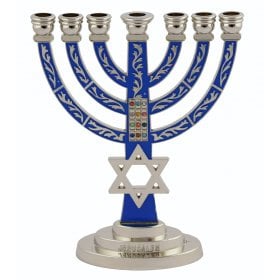 7-Branch Menorah, Dark Blue on Silver with Breastplate and Star of David – 5.2"Height: 5.2"$17.37
 -
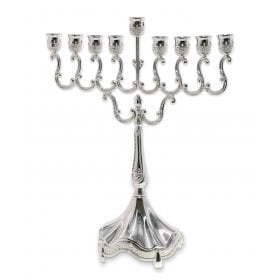 Classic Curved Chanukah Menorah for Candles, Silver - 8 InchesHeight: 8"$19.95
 -
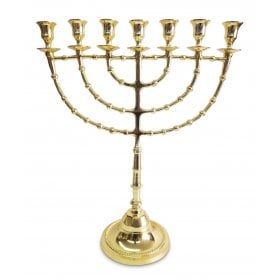 Extra Large Decorative Gleaming Seven Branch Menorah, Gold Brass – 18"$244.54
 -
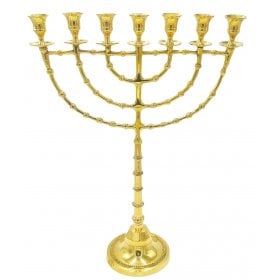 Extra Large Decorative Seven Branch Menorah, Gleaming Gold Brass – 22"$275.48
 -
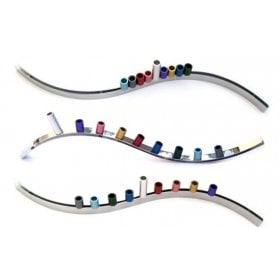 Laura Cowan Colorful Curving Slide Magnet Hanukkah MenorahLength: 15"$377.50
 -
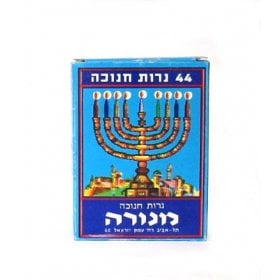 Chanukah Candles in Assorted Colors, Small Size - Box of 44$4.17
 -
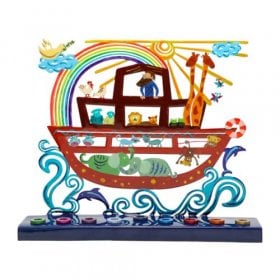 Yair Emanuel Hand Painted Chanukah Menorah, Noahs Ark with Rainbow and Animals$84.51
 -
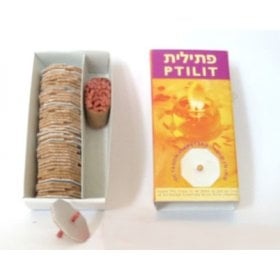 Floating Wicks and Cork Floaters for Chanukah and Shabbat - Box of 50$3.43
 -
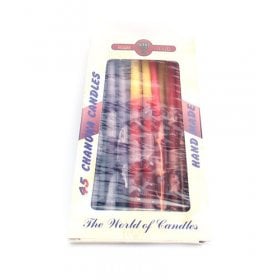 Dripless Slender Hanukkah Menorah Candles - ColorfulSize: 6"$11.57
 -
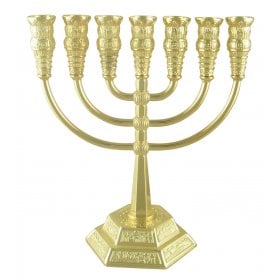 Seven-Branch Menorah with Jerusalem Images, Gold - Option: 5.3" or 8.6" HeightComes in two sizes$13.68 - $51.84
 -
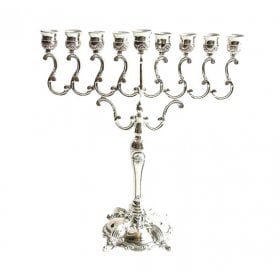 Silver Plated Chanukah Menorah, Swirls Design – 7.5 Inches Height$18.53
 -
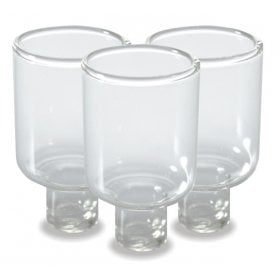 Set of Nine Glass Inserts for Oil Lighting Chanukah Menorah - Total Height 2"Height: 2"$4.82
 -
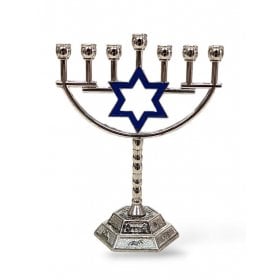 Small Silver Seven Branch Menorah on Stem with Blue Enamel Star of David$29.00
 -
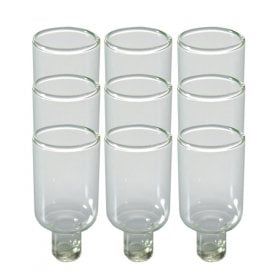 Set of Nine Glass Inserts for Oil Lighting Menorah, Small - Total Height 2"Height: 1.8"$4.59
 -
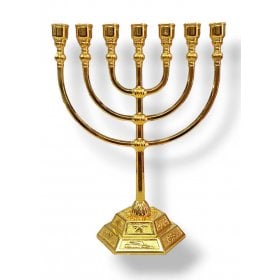 Small Gold Seven Branch Menorah Based on Cardo Model - Engraved Base$29.00
 -
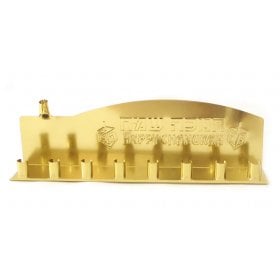 Gold Colored Low Cost Tin Chanukah MenorahSize: 10"$4.06
 -
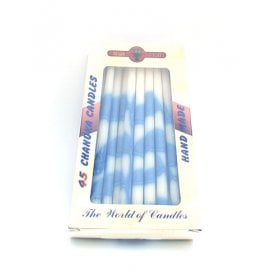 Dripless Slender Hanukkah Menorah Candles - Blue and WhiteSize: 6"$11.57
 -
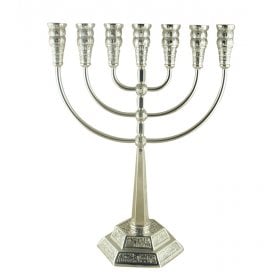 Seven Branch Menorah with Jerusalem Images, Silver - 5.3" or 8.6" HeightComes in 2 sizes$13.68 - $51.84
 -
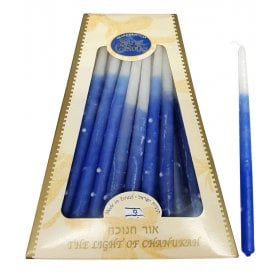 Handcrafted Dripless Decorative Chanukkah Candles - Blue and WhiteLength: 5.5"$10.03
 -
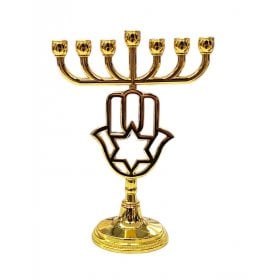 Small Gold Color Seven Branch Menorah with Hamsa and Star of David Design$29.00
 -
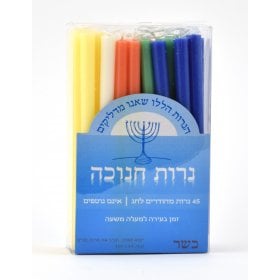 Hanukkah Candles Dripless, Mixed Colors - Box of 45Size: 5.1"$6.91
 -
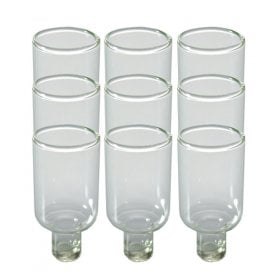 Set of Nine Glass Inserts for Oil Lighting Chanukah Menorah, Small - Total Height 1.7"Cup Height: 1.1"$4.59
 -
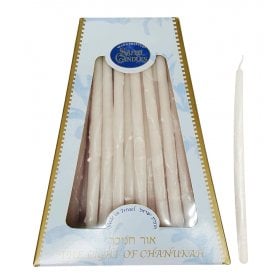 Handmade Dripless Hanukkah Candles - Pure WhiteLength: 5.5"$13.62
 -
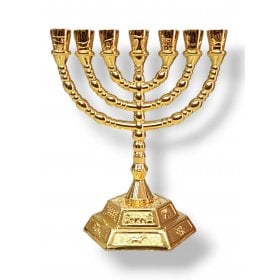 Small Gold Seven Branch Menorah with Twelve Tribes Design on Base$29.00
 -
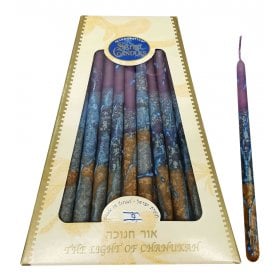 Handmade Dripless Hanukkah Candles - Gold Purple and TurquoiseLength: 5.5"$13.62
 -
 Nickel Plated Hanukkah Menorah, Decorative Base and Branches – 9 Inches Height$42.19
 -
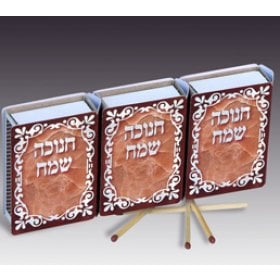 3-Pack Matchboxes with Happy Chanukah in Gold in Hebrew$4.06
 -
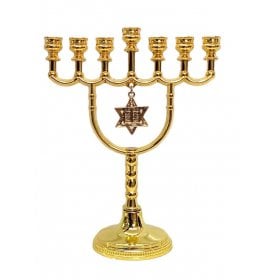 Small Gold Metal Seven Branch Menorah with Decorative Star of David Pendant$29.00
 -
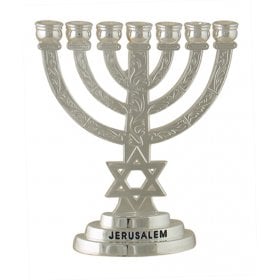 Small Decorative 7-Branch Menorah with Star of David & Breastplate, Silver - 4”Height: 4"$9.82
 -
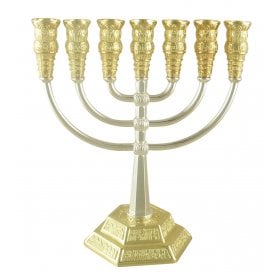 Two Tone Silver and Gold 7-Branch Menorah, Jerusalem Images – 8.6” Height8.6" Height$51.84
 -
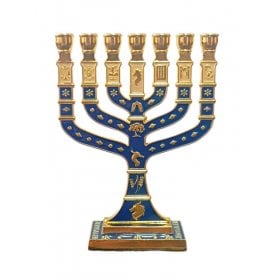 Small Gold Metal 7-Branch Menorah with Enamel, 12 Tribes Engraving - Color Choice$11.90
 -
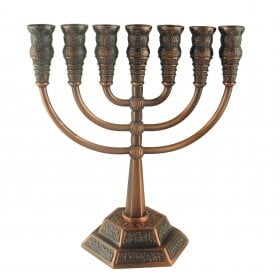 Seven Branch Menorah with Jerusalem Images, Bronze – Option 5.3" or 8.6" HeightChoice of sizes$13.68 - $51.84
Welcome to our Menorah Collection
Welcome to the aJudaica collection of Menorahs, kindled each evening for the eight-days of Hanukkah - everyone's favorite Jewish holiday. Here, at aJudaica, we also love Hanukkah. Viewing our Menorahs, we already imagine the glowing lights and can almost taste the yummy steaming latkes and delectable doughnuts. Hanukkah (also written Chanukah) is the holiday of parties and family gatherings. At aJudaica, you will want to find a Menorah that honors the occasion and creates the right atmosphere.
AJudaica's Seven and Eight Branch Menorahs
Many customers ask us what the difference is between seven and eight branch Menorahs. Briefly - the seven branch menorah, filled with mystical significance, is a reminder of the magnificent solid gold Menorah that was lit daily in the holy Temple. Its image is reproduced on the victory arch of Titus in Rome. You will find a huge selection in our Seven-Branch Menorah category.
The eight branch Menorah, also called Hanukkiah, commemorates the victory of the Jewish People over the Syrians over 2000 years ago. Led by the heroic Maccabees, they struggled for the right to openly practice Judaism. When they entered the defiled Temple in Jerusalem and wanted to kindle the Menorah, a miracle happened and a small vial of oil, enough for one day, burned for eight. In commemoration, we celebrate Hanukkah for 8 days with 8 lights.
Why should I buy from aJudaica?
This is the question everyone asks (or thinks) – why order from aJudaica if I can buy online the same or similar from Walmart or Amazon? The answer - when you buy from aJudaica you are showing your love and support for the people of and land of Israel. Buying the products of our Judaica artists who live and work in Israel, enables them to work with dignity and supports the economy of Israel. We invite you to compare prices. You will be pleasantly surprised to find that many of our prices are highly competitive.
The quality of aJudaica service
At aJudaica, customer satisfaction always comes first. Founded in 2003, we have established a solid reputation for top service, confirmed by the many positive testimonials we receive. What greater tribute can there be than our family of loyal customers, purchasing from us the second or third time and more?!
Tell us about the Menorahs on your website
Most of our Menorahs can be used for candles or olive oil unless otherwise stated. The small pocket or travel menorahs should be lit with candles only. Look through our candle category to find standard Hanukkah candles or decorative colorful tapers. If you opt for the traditional oil lighting, we have glass cups and wicks or an all-in-one kit with pre-filled cups to fit most Menorahs. On each Hanukkah Menorah, you will find a shamash light holder, used every evening for the Menorah lighting.
Buying a Hanukkah Menorah from aJudaica
We offer a choice of close to 400 Menorahs, with new designs being added each year. There is a full range at every price level – beginning with a few dollars to over $700 for exclusive creations. Scroll through and enjoy a dazzling selection of classic and modern, brightly colored and bronze, jumbo size and miniature. There is painted wood, glass, stainless steel, anodized aluminum, nickel, brass and silver plate. There are unique original designs or classic styles that are year-round favorites. (If you want sterling silver or solid gold, please look elsewhere). For children – there are trendy colorful Menorahs they are sure to adore and treasure. We are sure that you will find on our website a Menorah to suit your style, taste and pocket.
Meet some of our artists…
For Menorahs with individual art expression, David Gerstein is a visual delight. Whether it's his butterflies, birds or Hamsa Menorah – each one is a tribute to this world famous artist. Equally dramatic are the colorful and original Menorah designs of Tzuki Art. Maintaining their record for exquisitely creative menorahs with perfect craftsmanship are Benny Dabach and Avner Agayof. The beauty of glass is reflected in the Menorahs of Friekmanndar and Itay Mager. Adi Sidler focuses on the contemporary style Jew who wants a Menorah that suits his d&233;cor and life style. His pocket size travelling menorahs are stunning in their minimal style design. Dorit Judaica incorporates her hallmark pomegranates and Hebrew texts and prayer words. Last but not least, Yair Emanuel's unsurpassed creativity is expressed in his amazing Menorah collection - a superb blend of color and design. In addition, there is a huge choice of menorahs that are produced by Israel-based companies. Considerably cheaper, they will bring light and joy to any Hanukkah gathering.
Why is a Menorah a great Judaica gift?
Traditionally, Hanukkah is gift time. So, it is the right opportunity to treat yourself or someone dear to you with a Menorah. Whether it is a birthday, a bar mitzvah, bat mitzvah, engagement, wedding or house warming – a Menorah is always a welcome gift. Whilst it may be in active use for only eight days of the year, it will be enjoyed year-round since a menorah make a magnificent home display. With its deep symbolic meaning and the role it has played in Jewish history and culture until today, a menorah is not only an impressive display but also gives a Jewish feel to any home or place of work.